ADU Septic System Feasibility Richmond VA
For properties served by a private septic system, wastewater capacity is one of the earliest feasibility questions for an ADU. Adding living space can affect whether the existing system can support the proposed use, and where on the property the ADU can go.
This is a feasibility review—not a septic installation, pumping, or repair service. The goal is to understand how a private wastewater system may shape the ADU strategy before design and construction commitments are made, and to identify where qualified septic, soil, or local health review is needed.
Private Wastewater Capacity Should Be Considered Early
An ADU adds fixtures, bedrooms, and daily wastewater flow to a property. On a private septic system, that added load has to be considered early—because the existing system, the proposed use, and the site layout all influence whether the project is feasible and how it should be designed.
Proposed use, bedroom configuration, and fixture count relate to wastewater demand, but the actual relationship depends on the system, the property, and applicable local requirements. There is no universal bedroom-count formula that applies to every property.
The existing home, the existing septic system, the site layout, and any reserve area where applicable are all part of the picture. Reviewing them together—before design is finalized—keeps a septic-served property from being planned around assumptions that do not hold.
Proposed Use
How the ADU will be used and how much daily wastewater demand it adds to the property.
Bedroom Configuration
How the proposed bedroom count relates to wastewater capacity for the specific system and property.
Existing System
The type, age, and condition of the existing septic system and whether it may support added load.
Site Layout
How the ADU footprint, drainfield, and any reserve area fit together on the property.
Reserve Areas
Where applicable, whether a replacement or reserve area is available and protected.
Local Review
Applicable local health and jurisdictional review that may govern septic and ADU feasibility.
ADU Placement and Wastewater Planning Can Be Connected
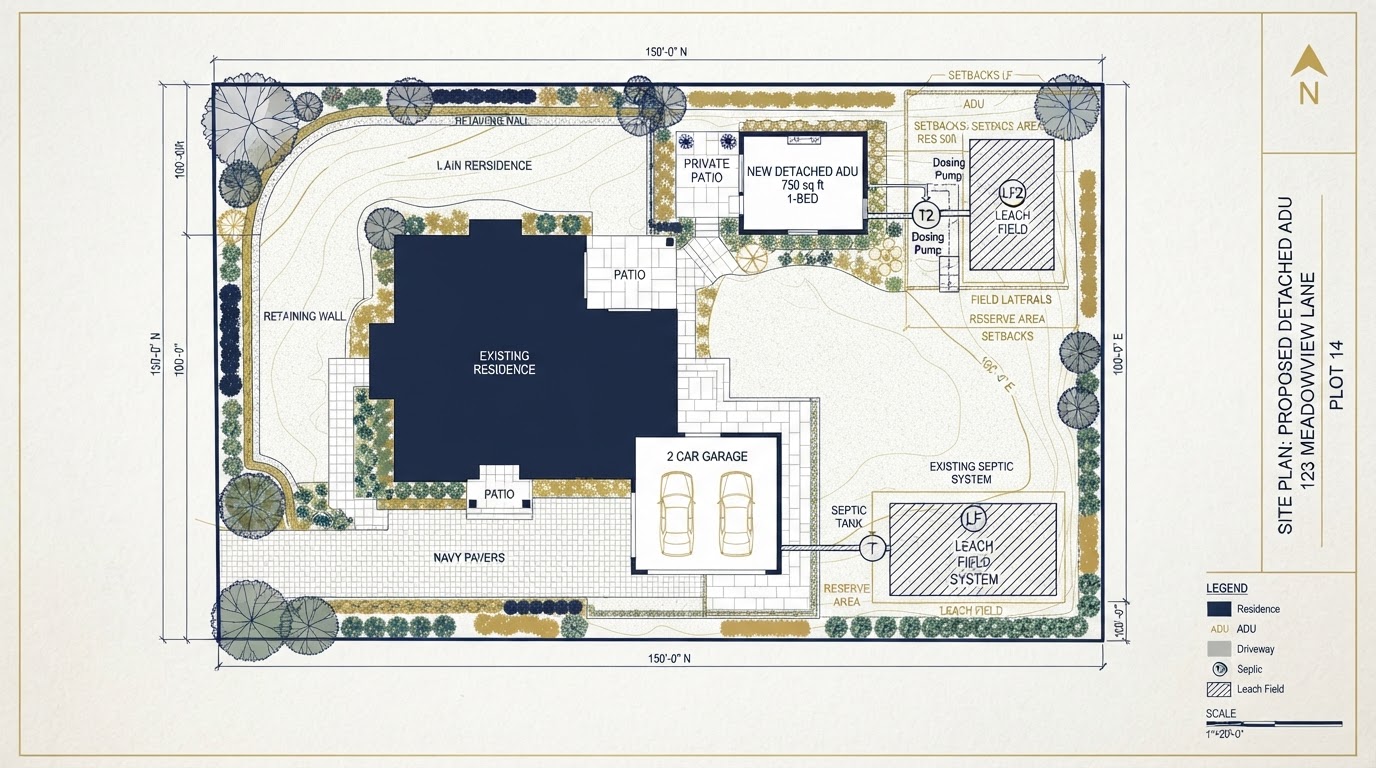
On a septic property, the wastewater system is not just a capacity question—it is also a placement question. The existing system location, drainfield area, any reserve area, driveways, outbuildings, utility routes, and topography all influence where an ADU can sit without conflicting with the septic system.
Existing System Location
The location of the existing septic tank and drainfield is reviewed so the ADU footprint does not encroach on the system or its required separation.
Drainfield & Reserve Area
The drainfield area and any replacement or reserve area, where applicable, are kept clear of the ADU and related construction so future system function is not compromised.
Driveways & Outbuildings
Existing driveways, outbuildings, and hardscape are considered so the ADU and the septic system coexist without one constraining the other.
Utility Routes
Water and sewer routes to the ADU are planned around the septic system so trenching and connections do not interfere with the drainfield.
Topography
Slope and site grading influence both ADU placement and wastewater flow, so the two are reviewed together rather than separately.
ADU Foundation & Access
The ADU foundation and construction access are planned so they do not compact or damage the drainfield area during the build.
Review Wastewater Feasibility Before Finalizing the ADU
Septic feasibility is reviewed as part of the broader ADU planning, identifying where qualified septic, soil, or local health review is needed before the project moves forward.
Confirm Property Wastewater Type
The property's wastewater service—private septic versus public sewer—is confirmed so the feasibility review addresses the right system.
Gather System & Property Information
Available information on the existing septic system, site layout, and property conditions is gathered to inform the review.
Define Proposed ADU Use
The proposed ADU use, bedroom configuration, and fixtures are defined so wastewater demand can be considered.
Review Site Relationships
The ADU footprint, drainfield, reserve area, and utility routes are reviewed together for conflicts.
Identify Capacity & Location Questions
Wastewater capacity and ADU placement questions are identified, including whether the existing system may support the added load.
Determine Additional Review Needs
Where needed, qualified septic, soil, or local health and jurisdictional review is identified and coordinated.
Refine ADU Placement & Design
The ADU placement and design are refined around the wastewater findings so the project works with the septic system.
Continue Feasibility & Permitting
The project continues into broader feasibility and permitting with the wastewater questions addressed.
Frequently Asked Questions About ADU Septic Feasibility
Direct answers about building on septic, system upgrades, bedroom count, and placement.
Review Wastewater Feasibility Before Finalizing the ADU
On a septic property, wastewater capacity and ADU placement are connected. Reviewing them early—before design is finalized—keeps the project from being planned around assumptions about a system that may not support the added load.
If your Richmond-area property is served by a private septic system and you are considering an ADU, share the property and the project you have in mind. We can help you understand the wastewater questions that shape feasibility and where qualified review is needed. Call 804-409-0928 to start.
Request an ADU & Suite Review
Let our specialists analyze your lot setbacks, existing structures, and local jurisdiction rules across Greater Richmond.