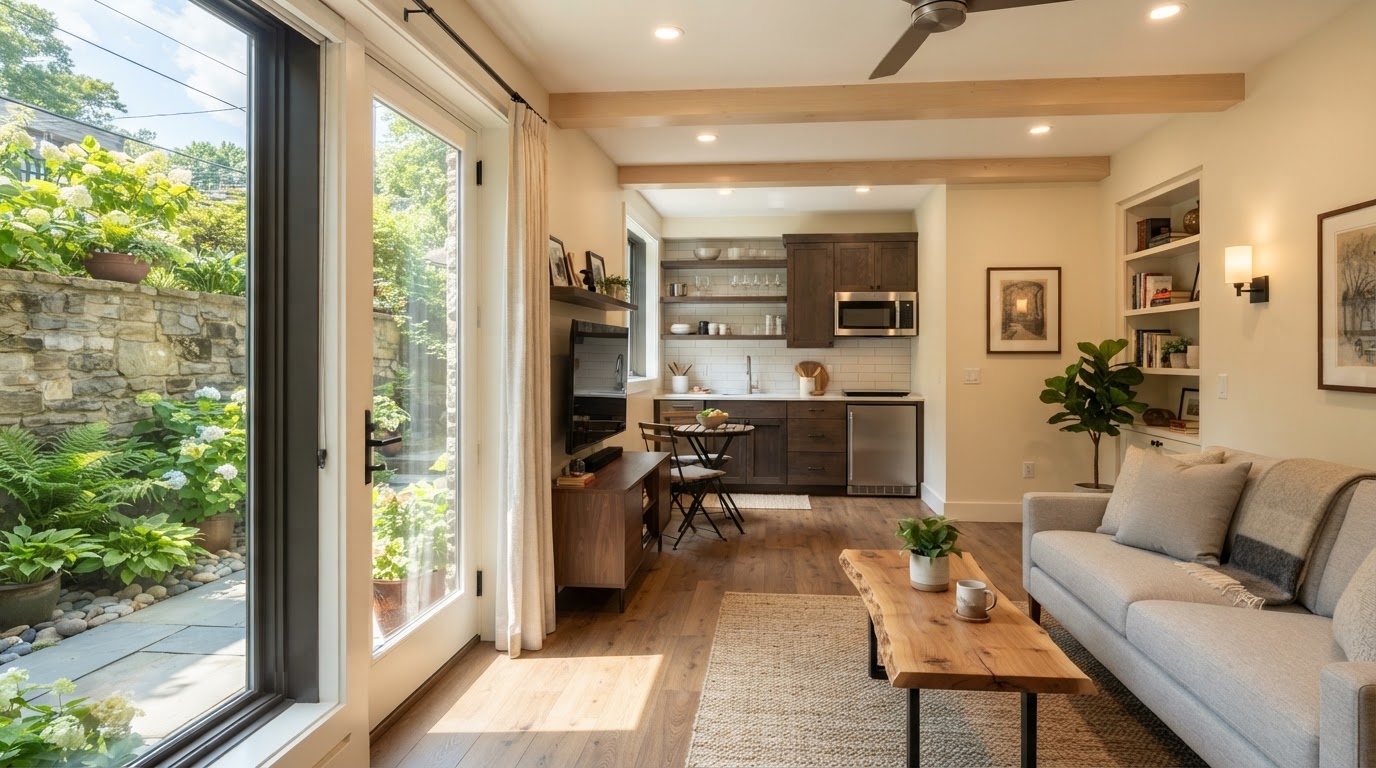
Walkout Basement Apartment Conversion Richmond VA
A walkout basement apartment conversion turns a basement with exterior grade-level access into apartment-style independent living space. For Richmond-area homeowners, the walkout condition can change what the basement can become—private entry, natural light, and an outdoor connection that most below-grade spaces lack.
This page focuses specifically on properties where the basement already has, or may support, walkout access. Access is one factor among many—egress, ceiling height, utilities, moisture, layout, and jurisdiction all shape what the conversion can realistically achieve.
Exterior Access Can Create a More Independent Basement Layout
A walkout basement sits at grade on at least one side, so the apartment can have a real exterior door rather than relying solely on interior stairs. That single condition can create a more apartment-like experience: a private entry, an outdoor patio connection, natural light through full-size windows, and reduced interaction with the main house's circulation.
Walkout access does not automatically make a basement legal for apartment use. Egress, ceiling height, utilities, moisture, layout, and jurisdiction still determine what is possible—which is why the walkout condition is evaluated, not assumed.
Private Entry
A grade-level exterior door gives the apartment its own entry, supporting privacy and independence from the main home.
Outdoor Connection
A patio or walkout yard connection makes below-grade space feel connected to the outdoors rather than enclosed.
Natural Light Opportunities
Full-size windows at grade bring in daylight that ordinary basement conversions must create with egress wells or light wells.
Reduced Main-House Circulation
With its own entry, the apartment's daily routine does not have to pass through the main home's living space.
Apartment-Like Experience
Entry, light, and outdoor access together can make a walkout basement feel like a genuine ground-floor apartment.
Guest & Family Privacy
The walkout configuration supports private guest or family living with a separation that interior-only basements rarely achieve.
Use the Walkout Condition to Improve Privacy and Residential Feel
Thoughtful layout makes the difference between a walkout basement that feels like a real apartment and one that feels like a finished basement with a door. The entry, window orientation, and living-area placement are designed around the grade-level condition rather than worked around it.
Entry Location & Orientation
The entry location sets the tone for the whole apartment. Orienting the living area toward the walkout wall places daylight and outdoor access where residents actually spend time.
Living Area & Bedroom Placement
The living area typically takes the walkout wall for light and patio access, while bedrooms are placed for privacy and sound separation from both the main home and the entry.
Windows & Natural Light
Full-size windows at grade are the walkout's biggest design advantage. Window placement is planned for daylight, ventilation, and applicable egress requirements verified for the property's jurisdiction.
Kitchen, Bathroom & Laundry
Kitchen, bathroom, and laundry placement is driven by plumbing routes and drainage. Below-grade plumbing requires careful planning, which the evaluation identifies before layout is finalized.
Moisture Control & Drainage
The walkout wall is also the most exposed wall. Existing grade, drainage, retaining walls, and water management at the walkout are reviewed early, because a walkout that collects water cannot reliably become living space.
HVAC, Lighting & Sound Separation
HVAC, lighting design, and sound separation complete the residential feel. The apartment is planned so it functions independently while remaining part of the same property and systems.
From Walkout Condition to a Built Apartment
A walkout basement apartment conversion starts with the existing grade and drainage conditions, because the walkout is both the design opportunity and the primary moisture risk. The process reviews the site first, then builds the apartment layout on top of what the conditions actually support.
Review Existing Walkout Condition
Existing exterior grade, the door and wall condition, retaining walls, and the walkout's dimensions are reviewed to confirm what the condition actually provides.
Evaluate Moisture & Drainage
Grade, drainage, waterproofing, and water movement at the walkout wall are evaluated, since moisture is the most common constraint on walkout conversions.
Define Intended Apartment Use
We discuss who will live in the apartment and how independently it should function, which shapes layout, kitchen configuration, and entry strategy.
Develop Layout & Plan Utilities
The apartment layout is developed around the walkout wall—living area, windows, kitchen, bath, laundry, storage—and plumbing, electrical, and HVAC are planned to serve it.
Review Code & Zoning
Egress, ceiling height, fire-separation, and classification requirements are reviewed against your jurisdiction's standards. We do not invent specific grading or building-code requirements; applicable rules are verified for your property.
Coordinate Permits & Complete Conversion
Permit documentation is coordinated and the conversion moves toward construction, with the apartment's classification confirmed during review rather than assumed.
Frequently Asked Questions About Walkout Basement Apartments
Direct answers about walkout access, egress, kitchens, and ADU classification.
Find Out What Your Walkout Basement Can Support
A walkout basement can be one of the strongest opportunities for independent living space on an existing property—but the grade, drainage, egress, and ceiling height have to support it. A walkout evaluation confirms what is realistic before you plan the apartment around it.
Share your property location and a few details about the walkout condition, and we will help you see what a walkout basement apartment could look like on your property.
Request an ADU & Suite Review
Let our specialists analyze your lot setbacks, existing structures, and local jurisdiction rules across Greater Richmond.