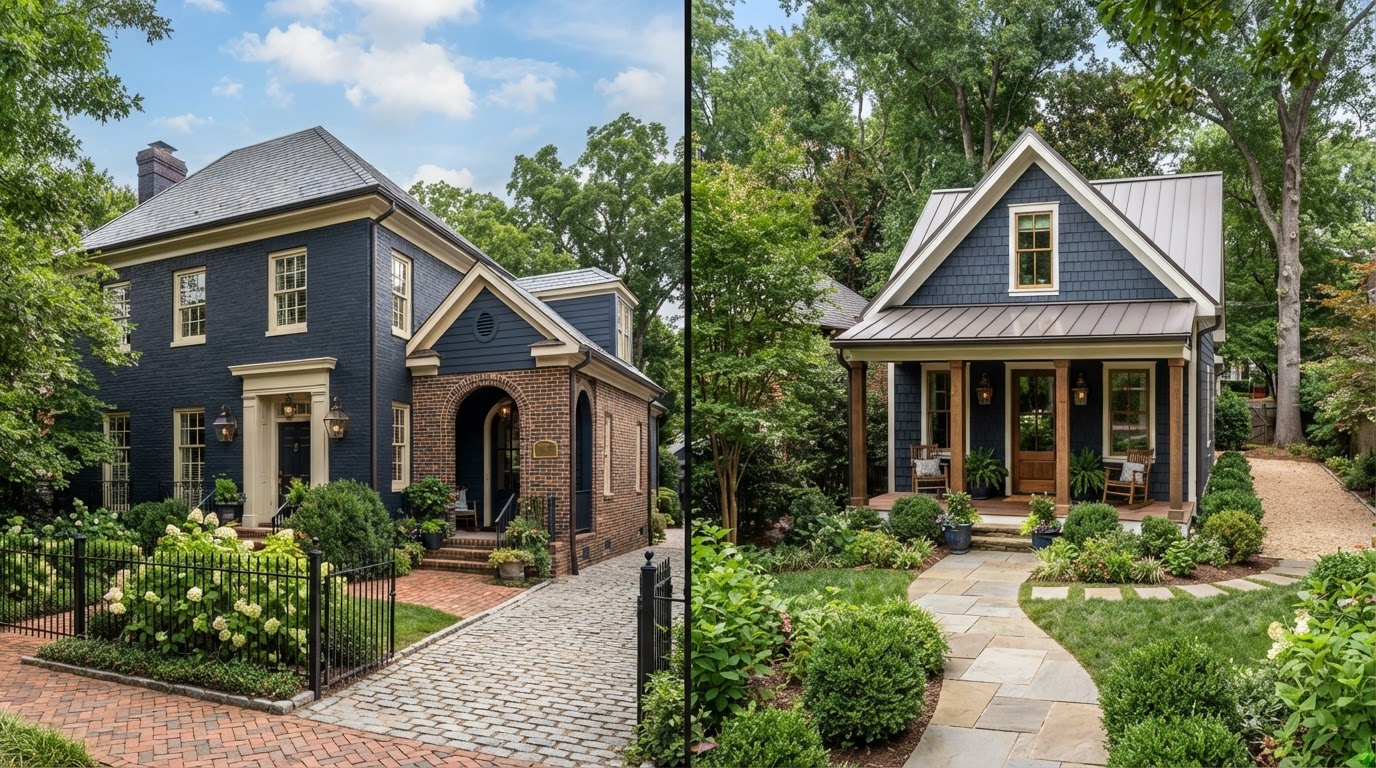
Attached vs Detached ADU
Attached and detached ADUs can both create independent living space, but they differ in privacy, connection to the main home, site use, utilities, construction, accessibility, outdoor space, architecture, and family interaction. Neither is universally better. The better option depends on the household and the property.
Here is a comparison to help you see which configuration your Richmond property and household point toward.
Choose More Physical Connection to the Main Home
An attached ADU connects directly to the main home—often as a first-floor addition or a side/rear suite. That connection can keep a family member close for caregiving and interaction, and may shorten utility runs by sharing the main home's service.
The trade-off is construction disruption to the main house. An attached addition requires a foundation and roof tie-in, which means working on the existing home. It also offers less privacy than a detached ADU and must work within the existing floor plan's constraints. For aging parents who want to be near family, or for a household that values proximity over separation, an attached ADU can be the right fit.
Closer Family Connection
Direct physical connection to the main home keeps a parent or family member close for caregiving and daily interaction.
Potentially Shorter Utility Runs
Sharing the main home's existing utilities can shorten connections, though capacity is still confirmed for the added load.
First-Floor Addition Possibilities
An attached ADU can be designed as a first-floor suite, which supports aging-in-place and reduced-stair goals.
Easier Caregiver Proximity
For households where proximity matters—caregiving, multigenerational living—an attached suite keeps support close.
Main-House Construction Disruption
An attached addition requires a roof and foundation tie-in, which means construction work on the existing home.
Existing Floor-Plan Constraints
The addition must integrate with the existing layout and exterior, which can limit design freedom compared with detached.
Choose More Physical Separation and Independent Character
A detached ADU is a separate building on the property, with its own entrance, outdoor area, and often its own character. That separation provides privacy and independence—a guest house, a rental unit where permitted, or a quiet retreat for an adult child. The trade-off is more site work: a new foundation, full utility runs, and construction access to the building location.
Privacy + Separate Entrance
A detached ADU offers more privacy and its own entrance, which supports independent living and, where permitted, rental use with more separation.
Distinct Outdoor Area
A detached building can have its own patio, garden, or yard area, separate from the main home's outdoor space.
Purpose-Built Layout
Because it is new construction, the layout, windows, and circulation can be designed for the intended use without existing-floor-plan constraints.
Guest + Family Flexibility
A detached ADU can serve guests, adult children, aging parents, or rental use over time, offering the most future-use flexibility of the two configurations.
Site Placement + Utilities
A detached ADU requires available yard area within setbacks, plus new utility runs from the main house or street; the distance affects cost.
Foundation + Construction Access
A new foundation and site access are part of the scope, which can be more involved on tight or alley-access lots.
Compare the ADU Types Around Your Property and Household
The choice between attached and detached comes down to the household's priorities and the property's constraints. This framework compares both across the variables that matter—without declaring a universal winner.
Privacy
Detached generally offers more privacy and separation; attached offers closer connection. The household's priority often decides this first.
Family Proximity
Attached keeps a parent or caregiver physically closer; detached provides independence with nearby support.
Accessibility
Both can be designed for step-free entry and first-floor living; the existing home's grade and layout affect which is easier to achieve.
Yard Impact + Utility Routing
Detached consumes yard area and needs new utility runs; attached uses less yard and may share utilities, but disrupts the main home.
Construction Disruption
Attached involves roof and foundation tie-ins to the existing home; detached builds separately but requires site access and a new foundation.
Outdoor Space + Architecture
Detached can have its own outdoor area and character; attached must integrate with the existing exterior.
Future Flexibility
Detached often offers more future-use flexibility; attached is more fixed to the main home's configuration.
Your Property Decides
Your property may make one option significantly more practical than the other. A property-specific review identifies which configuration the lot supports.
Frequently Asked Questions About Attached vs Detached ADU
Direct, balanced answers—neither configuration is universally better.
Compare the ADU Types Around Your Property and Household
Attached and detached ADUs each have real advantages, and your property often makes one significantly more practical than the other. The right way to decide is a review that compares both against the lot, the utilities, and the household's goals.
Share the property and what you want the space to do for your family, and we can map which configuration the property supports. Call 804-409-0928 to start.
Request an ADU & Suite Review
Let our specialists analyze your lot setbacks, existing structures, and local jurisdiction rules across Greater Richmond.