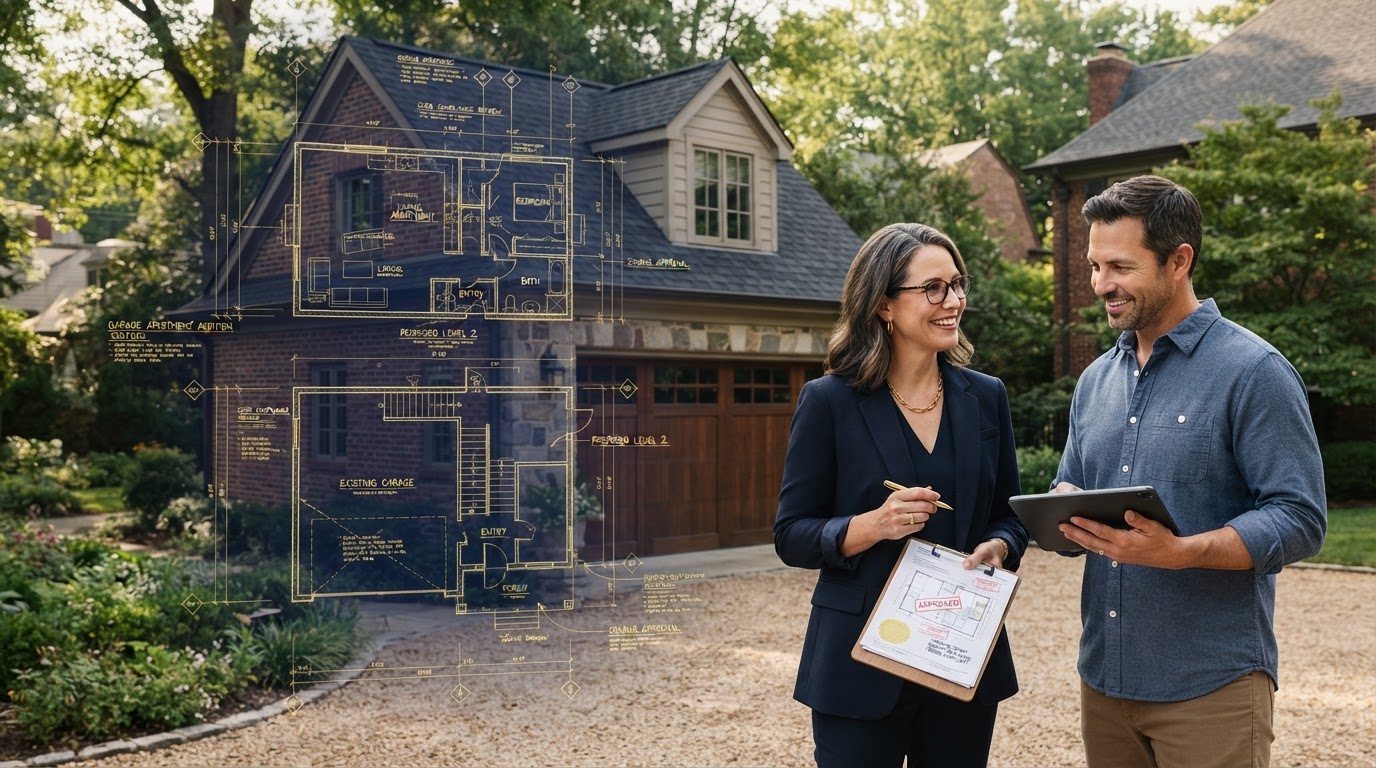
Can I Legalize an Existing Garage Apartment or Unpermitted ADU in Richmond VA?
Potentially, but legalization is property- and jurisdiction-specific. Whether an existing garage apartment, converted garage, basement unit, or accessory structure can be brought into compliant use depends on the existing permits, the original construction, the current structure, the zoning, the utilities, the foundation, the fire and life-safety conditions, the egress, and the applicable current requirements.
Lack of paperwork does not by itself tell the full story, and legalization is never guaranteed. The right first step is a property-specific review of what already exists before assuming what the space needs.
Existing Conditions and Permit History Matter
Legalization is not a single universal process. The starting point is what was actually built, what was documented, and how the space is currently used. A garage apartment that was permitted decades ago, inspected, and lightly modified is a very different starting point from a garage that was quietly converted into a living space with no record of the electrical, plumbing, or structural changes.
The questions below shape the review. Was the structure originally permitted? Was the residential conversion documented? Were the electrical and plumbing changes permitted? Does the current layout match the available records? Was a kitchen or bathroom added? Was a garage converted into living space? Each answer narrows what kind of review, documentation, or correction may be needed.
Importantly, the absence of paperwork does not by itself determine the outcome. Some unpermitted spaces can be brought into compliance with documentation and targeted corrections; others may require substantial reconstruction. The path is determined for the specific property rather than assumed.
Original Construction
What was built, when, and under what permit (if any) shapes whether the structure itself can support residential use.
Residential Conversion
Whether the conversion to living space was documented affects what must now be reviewed or corrected.
Electrical & Plumbing
Permitted electrical and plumbing changes are a different starting point from unpermitted additions.
Current Layout vs. Records
Differences between the current layout and available records can reveal modifications that need review.
Kitchen & Bathroom
Added kitchens and bathrooms introduce plumbing, venting, and fire considerations that may need documentation.
Garage Conversion
A converted garage carries its own foundation, egress, and residential-code questions on top of legalization.
Legalization May Require More Than Filing Paperwork
Bringing an existing space into compliant use often involves more than documentation. Depending on the structure and the current requirements, physical corrections may be needed before approvals are possible. The factors below are reviewed at a high level for the specific property, and no legalization is promised.
Foundation & Framing
The existing foundation and framing are reviewed for residential use, since a garage or accessory structure may not have been built to support living space or an added story. Structural questions are identified for the specific structure rather than assumed adequate.
Egress & Windows
Egress openings and natural light are common legalization issues, especially for basement units and garage conversions. Existing windows are evaluated for residential use rather than assumed to meet current requirements.
Fire Separation & Smoke/CO
Garage apartments and attached spaces may need separation assemblies, smoke alarms, and carbon monoxide detection reviewed or added. Life-safety details are coordinated with the building configuration and applicable code.
Electrical, Plumbing & HVAC
Unpermitted electrical, plumbing, and HVAC work may need to be documented, evaluated, or corrected. These systems are reviewed for the specific space rather than assumed compliant from appearance.
Insulation & Kitchen Configuration
Insulation levels and kitchen or bathroom configuration can affect whether the space meets current requirements. These are reviewed alongside the rest of the structure rather than treated as cosmetic.
Site & Zoning Conditions
The property's zoning, setbacks, lot coverage, and use are reviewed for the current configuration, since a space that predates current rules may still need to satisfy applicable requirements. Site and zoning questions are confirmed for the specific jurisdiction.
Start With the Existing Space Before Assuming What It Needs
A legalization review works outward from what already exists. The goal is to understand the structure, the permit history, and the current requirements before deciding whether the space can be approved as-is, modified, or reconstructed. The process below is adapted to the specific property and jurisdiction.
Identify Property Jurisdiction
The first step is confirming the property's jurisdiction, since permit history, zoning, and compliance requirements can differ across Greater Richmond.
Gather Available Records
Available permit and property records are gathered to understand what was documented and where the gaps are. Missing records do not by themselves determine the outcome.
Document Existing Conditions
The existing structure, layout, electrical, plumbing, and finishes are documented so the review reflects what is actually there rather than what records suggest.
Define Current & Proposed Use
How the space is currently used and how the homeowner wants to use it are defined, since use affects which requirements apply.
Identify Zoning & Code Questions
Applicable zoning and code questions are identified for the jurisdiction, with project-specific questions confirmed with the applicable jurisdiction.
Identify Physical Corrections
Where physical corrections may be needed—egress, electrical, fire separation, and others—they are identified so the scope is clear before any work begins.
Coordinate Plans & Technical Review
Plans and any required technical or professional review are coordinated for the specific property, including structural or engineering review where appropriate.
Determine Permit / Legalization Path
The permit or legalization path is determined for the specific property and jurisdiction. No legalization or permit approval is guaranteed, and final determinations remain with the applicable jurisdiction.
Frequently Asked Questions About Legalizing an Existing ADU
Direct answers about unpermitted garage apartments, basement units, missing permits, and jurisdiction differences.
Start With the Existing Space Before Assuming What It Needs
If you have an existing garage apartment, converted garage, basement unit, or accessory structure and you are not sure where it stands, the right first step is a property-specific review of what already exists. Permit history, structure, utilities, and current requirements are reviewed before any assumption is made about what the space needs.
Share your Richmond-area address and tell us about the existing space and how you want to use it. We can help you understand what may be involved and what the next step is. Call 804-409-0928 to start.
Request an ADU & Suite Review
Let our specialists analyze your lot setbacks, existing structures, and local jurisdiction rules across Greater Richmond.