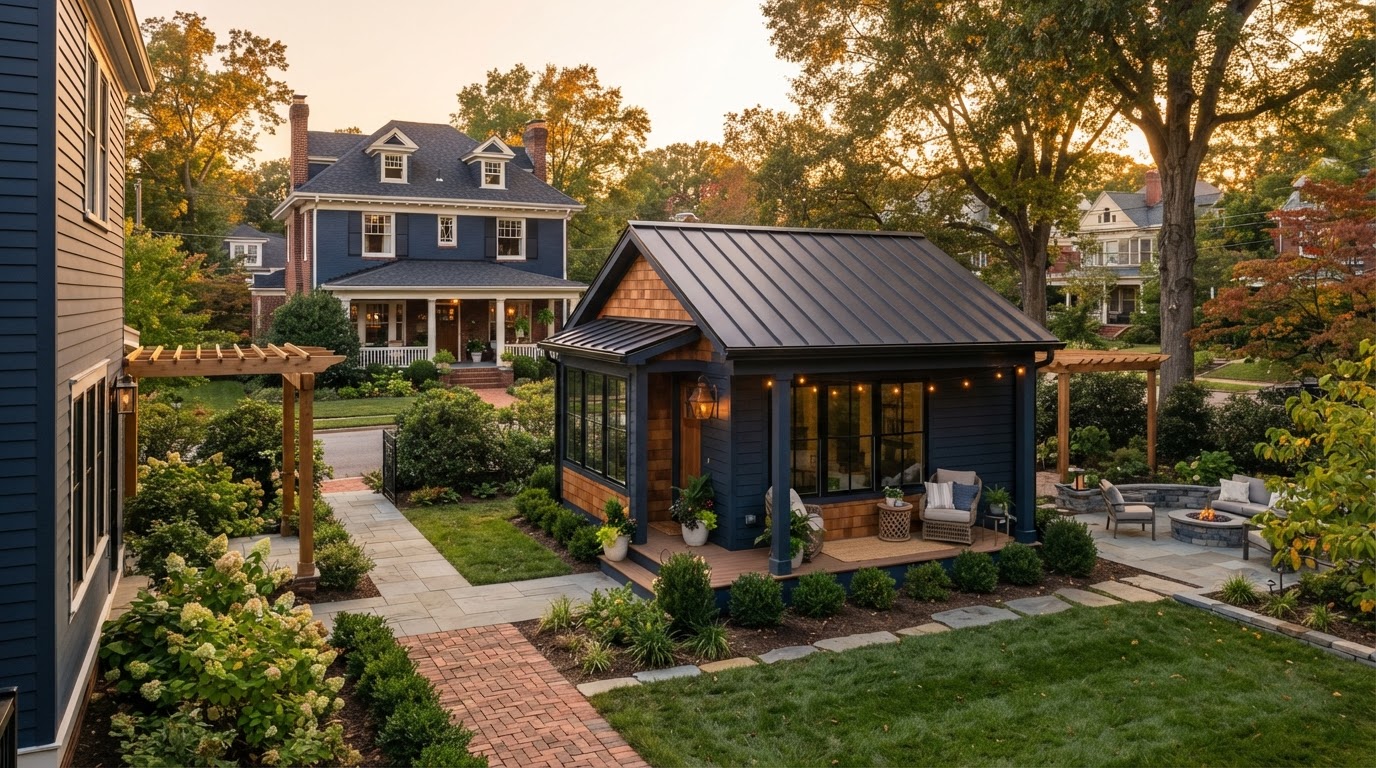
Does an ADU Increase Property Value Richmond VA?
Does an ADU increase home value? An ADU may add functional utility and may influence property value, but no specific increase should be assumed or guaranteed. Factors can include permit status, quality, size, layout, ADU type, location, property condition, buyer demand, appraisal treatment, and rental eligibility where permitted.
Functional value—additional independent living space—and appraised value are not the same thing. A contractor does not determine formal market or appraisal value. This page explains the difference and what can affect how an ADU is viewed.
Functional Value and Appraised Value Are Not the Same
An ADU adds functional utility—additional independent living space on the property. That utility can serve aging parents, adult children, guests, multigenerational living, downsizing, or potential rental use where permitted. For many households, that functional value is the real reason to build.
Appraised value and resale value are different. They are determined by appraisal and real estate professionals based on the market, the property, permit status, and buyer demand. A contractor does not determine formal market or appraisal value, and no specific increase should be assumed or guaranteed.
This is why we never state that an ADU increases value by a fixed percentage. The honest answer is that an ADU may add functional utility and may influence property value, with the effect depending on many factors—none of which a contractor can guarantee.
Additional Living Space
An ADU adds independent residential space for family, guests, or downsizing on the same property.
Aging-Parent Housing
An ADU can keep parents close with privacy and independence—a functional value many households prioritize.
Adult-Child Housing
An ADU can give adult children independent living space while remaining on the family property.
Guest + Family Flexibility
An ADU provides flexible guest space and future-use options as household needs change.
Multigenerational Living
An ADU supports multigenerational arrangements with separate living areas under one property.
Potential Rental Use
Where legally rentable under the jurisdiction, an ADU may support rental use—rental legality is not guaranteed.
What Can Affect How an ADU Is Viewed
Several factors can affect how an ADU is viewed by a buyer, appraiser, or lender. These do not guarantee any value outcome, but they shape how the space is perceived and used.
Permitted Construction
A permitted ADU—built through the applicable zoning, building, and trade permit process—has documented construction that a buyer, appraiser, or lender can review. Unpermitted space can create disclosure, financing, and insurance questions.
Quality + Layout
The construction quality, size, and layout affect how the ADU functions as living space. A well-designed, well-built ADU serves its intended use more effectively than an improvised one.
Privacy + Parking
Privacy and parking impact matter. A detached ADU with a private entrance and preserved parking can function differently than a conversion that sacrifices parking or shares space closely with the main home.
Kitchen + Bath
A full kitchen and bathroom make an ADU more independent. A kitchenette or half-bath changes how the space can be used and how it may be appraised.
Architecture + Accessibility
Exterior architecture that coordinates with the main home, and accessibility features where needed, can affect how the ADU is viewed and how flexibly it can be used over time.
Location + Future Flexibility
Where the ADU sits on the lot and how flexibly it can be used—family, guest, or rental where permitted—affect its functional value. Future flexibility is a real benefit even when no resale increase is guaranteed.
Design Around Real Property Use First
Because functional value and appraised value are different, the most useful approach is to design around the real property use first and let value follow from a permitted, well-built ADU. Valuation questions go to appraisal and real estate professionals.
Define Intended Use
Define the intended use—aging parents, adult children, guests, downsizing, or rental where permitted—so the ADU serves the actual household.
Confirm Feasibility
Confirm the property can support the ADU through a feasibility review of the site, existing structures, and utilities.
Choose ADU Type
Choose the ADU type—detached, attached, garage conversion, garage apartment, or basement—that fits the property and the use.
Prioritize Layout
Prioritize the layout—kitchen, bath, privacy, entrance, and accessibility—so the space functions well for the intended resident.
Build Through the Approval Path
Build through the applicable zoning, building, and trade permit path so the ADU has documented, permitted construction.
Maintain Documentation
Maintain the plans, permits, and construction documentation so a buyer, appraiser, or lender can review the ADU's permitted status.
Consult Valuation Professionals
Direct valuation and resale questions to appraisal and real estate professionals. A contractor does not determine formal market or appraisal value.
Frequently Asked Questions About ADU Property Value
Direct answers—no value guarantees, no resale promises.
Discuss Your Property + ADU Options
An ADU may add functional utility and may influence property value, but no specific increase is guaranteed. The most useful approach is to design around the real property use—aging parents, adult children, guests, downsizing, or rental where permitted—and let value follow from a permitted, well-built, well-located ADU.
Share your property and your goals, and we can map the ADU options that serve your household. Valuation questions go to appraisal and real estate professionals. Call 804-409-0928 to start.
Request an ADU & Suite Review
Let our specialists analyze your lot setbacks, existing structures, and local jurisdiction rules across Greater Richmond.